
The ALX4 Blue-Eyed Gene in Dogs
Blue eyes in a dog that is not merle and not white-faced used to be a mystery. In 2018 researchers found the answer: a duplicated stretch of DNA next to a gene called ALX4 on dog chromosome 18. This page explains what the ALX4 blue-eye variant is, how it is inherited, what it means for Bernedoodle and other Doodle puppies, and where you can have a dog DNA-tested for it, with links to the original research.
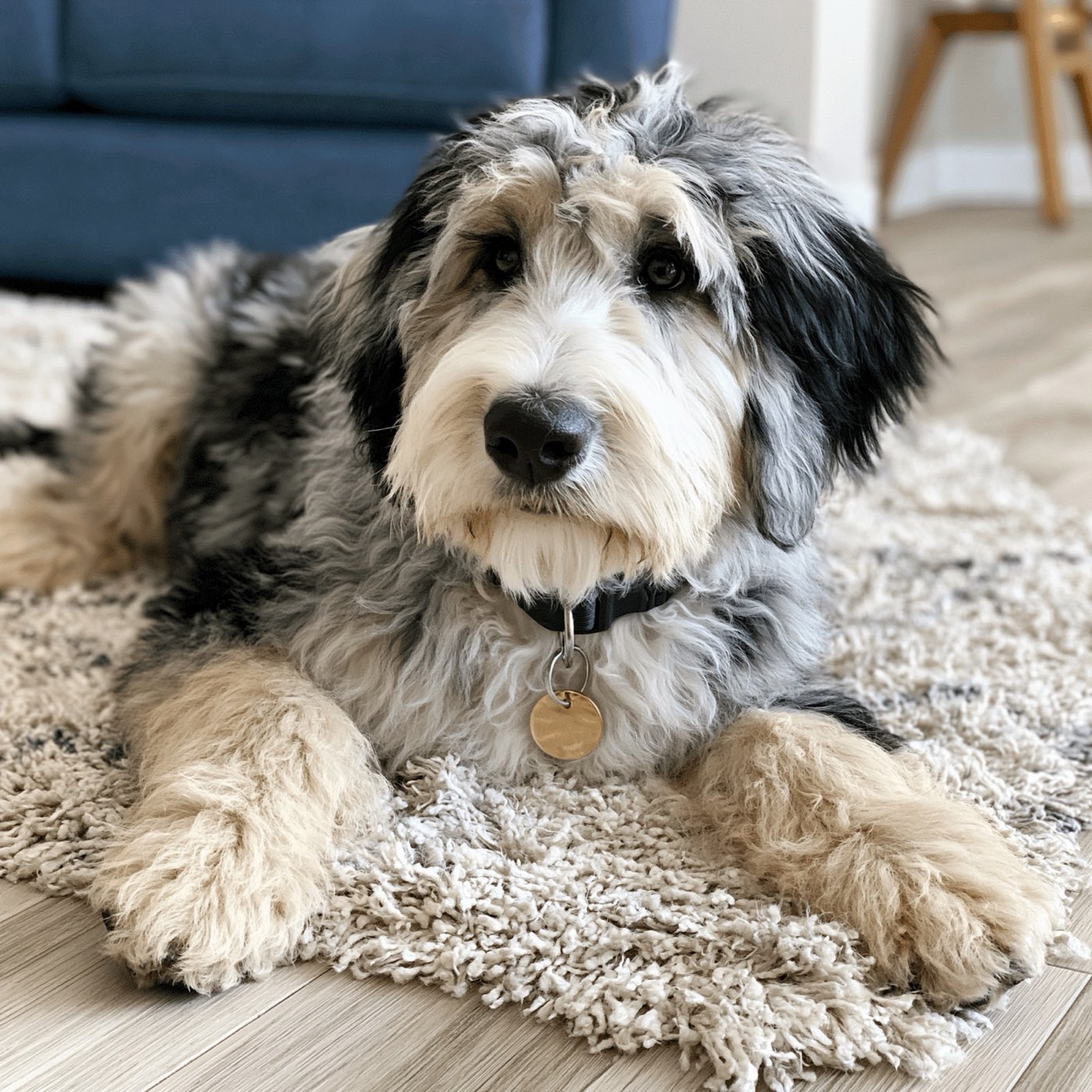
Three Ways a Dog Gets Blue Eyes
Most blue-eyed dogs owe the color to coat-pattern genes, not an eye gene. The merle gene (PMEL) dilutes pigment in patches, and when a patch lands over an eye it turns blue. Extreme white spotting (MITF) can do the same thing when white covers the face. The third route is different: a change near the ALX4 gene produces solid blue eyes, or one blue and one brown eye (heterochromia), in dogs with ordinary, fully pigmented coats. Siberian Huskies are the classic example, and the same variant turns up in Australian Shepherds, Alaskan Klee Kai and some mixed-breed and Doodle lines that carry those ancestries.
- Merle (PMEL17): patchy pigment dilution; blue eyes when a merle patch covers the eye; double-merle breeding is dangerous
- White spotting (MITF): blue eyes when a white patch covers the eye; linked with deafness in some breeds
- ALX4 duplication: blue eyes with a normal coat; no known link to deafness or blindness in the original study
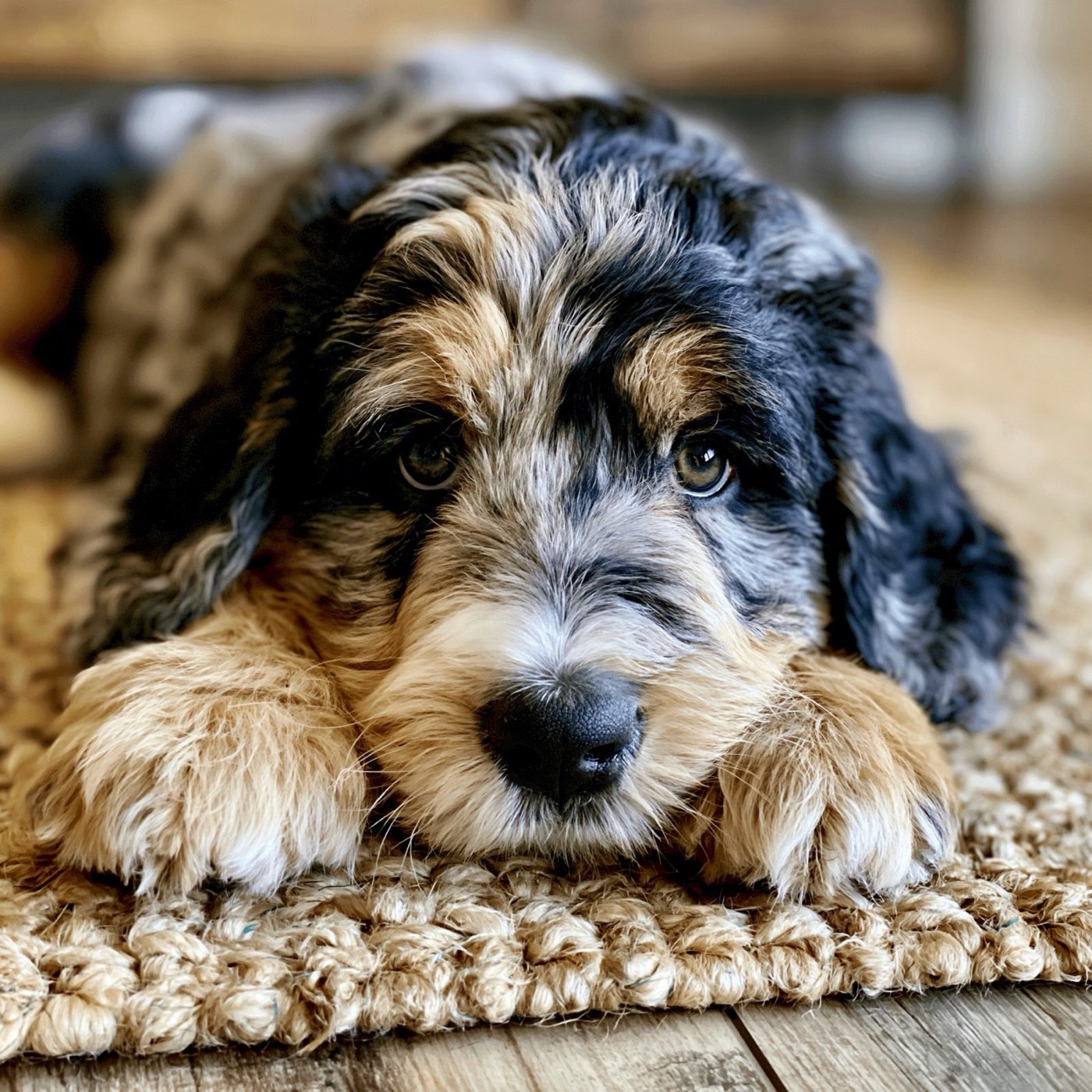
The Discovery: A 98.6-kb Duplication Near ALX4
In October 2018 scientists at Embark Veterinary published the first genetic study of blue eyes in dogs, using DNA from more than 6,000 customer dogs. In a genome-wide association study of 3,180 dogs they found a very strong signal on chromosome 18 and traced it to a 98.6-kilobase tandem duplication sitting just upstream of ALX4, a homeobox gene involved in eye and craniofacial development in mammals.
The duplication explained about three-quarters of the blue-eyed dogs in the study. Every one of the 22 blue-eyed purebred Siberian Huskies carried it, and it was almost absent from the 195 other breeds examined. The paper was published in PLOS Genetics and is free to read; the links are in the sources below.
- Location: canine chromosome 18, about 44.79–44.89 Mb, between CD82 and ALX4
- Size: 98.6 kb tandem duplication
- Found in: Siberian Husky, Alaskan Klee Kai, Australian Shepherd, Australian Cattle Dog, and mixes with those breeds
- Not found in: 195 of 201 breeds tested
- Mechanism: thought to alter ALX4 regulation; the exact mechanism has not yet been proven
How the ALX4 Blue-Eye Variant Is Inherited
The variant behaves as a dominant trait with incomplete penetrance. One copy is usually enough to produce blue eyes or heterochromia, but not always: in the study about 45 percent of dogs with a single copy still had brown eyes, and brown-eyed carriers often carried the dominant black-mask allele (Em), which may be masking the effect. Dogs with two copies are more reliably blue-eyed.
For breeders this means a carrier can pass the trait on even when its own eyes are brown, and two brown-eyed parents can produce a blue-eyed puppy if one of them carries ALX4. It also means a DNA test, not eye color, is the only reliable way to know a dog's ALX4 status.
- Dominant: one copy (N/BE or similar) can produce blue eyes
- Incomplete penetrance: some carriers have brown eyes
- Two copies (BE/BE): blue eyes more consistently
- Heterochromia: one blue eye and one brown eye is a common expression
- No health effects were reported with the variant in the original study
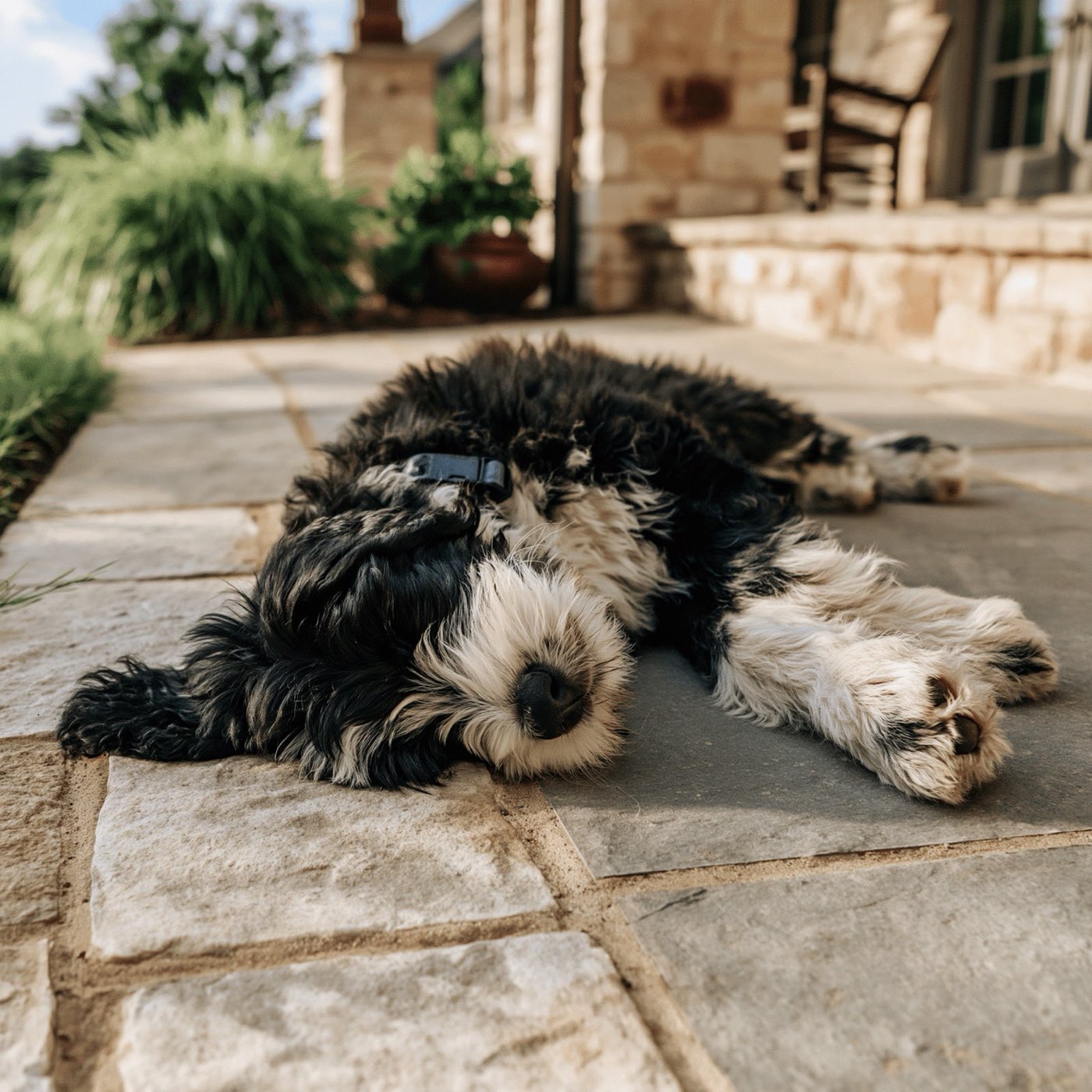
What ALX4 Means for Bernedoodle and Doodle Puppies
Bernese Mountain Dogs and Poodles are not among the breeds where the ALX4 duplication was found, so blue eyes in a Bernedoodle are most often the merle gene at work. That matters, because merle blue eyes come with the responsibility never to breed two merles together. Occasionally a Doodle line carries ALX4 through Australian Shepherd or Husky ancestry further back (Aussiedoodles and Australian Mountain Doodles are the usual route), and in that case blue eyes can appear on a normal tri-color or phantom coat with no merle involved.
At Still Water Doodles we DNA-test every parent dog, which tells us whether a blue-eyed puppy got its color from merle or from ALX4, and lets us plan pairings responsibly. If you fall in love with a blue-eyed puppy, we can show you the genetics behind it.
- Blue eyes in most Bernedoodles come from merle, not ALX4
- ALX4 can enter Doodle lines through Australian Shepherd or Husky ancestry
- A DNA panel on the parents tells you which gene is responsible
- Merle × merle breeding must be avoided; ALX4 carries no such risk
- Puppy eye color can shift until about 12 weeks; ALX4 blue tends to stay a clear ice-blue
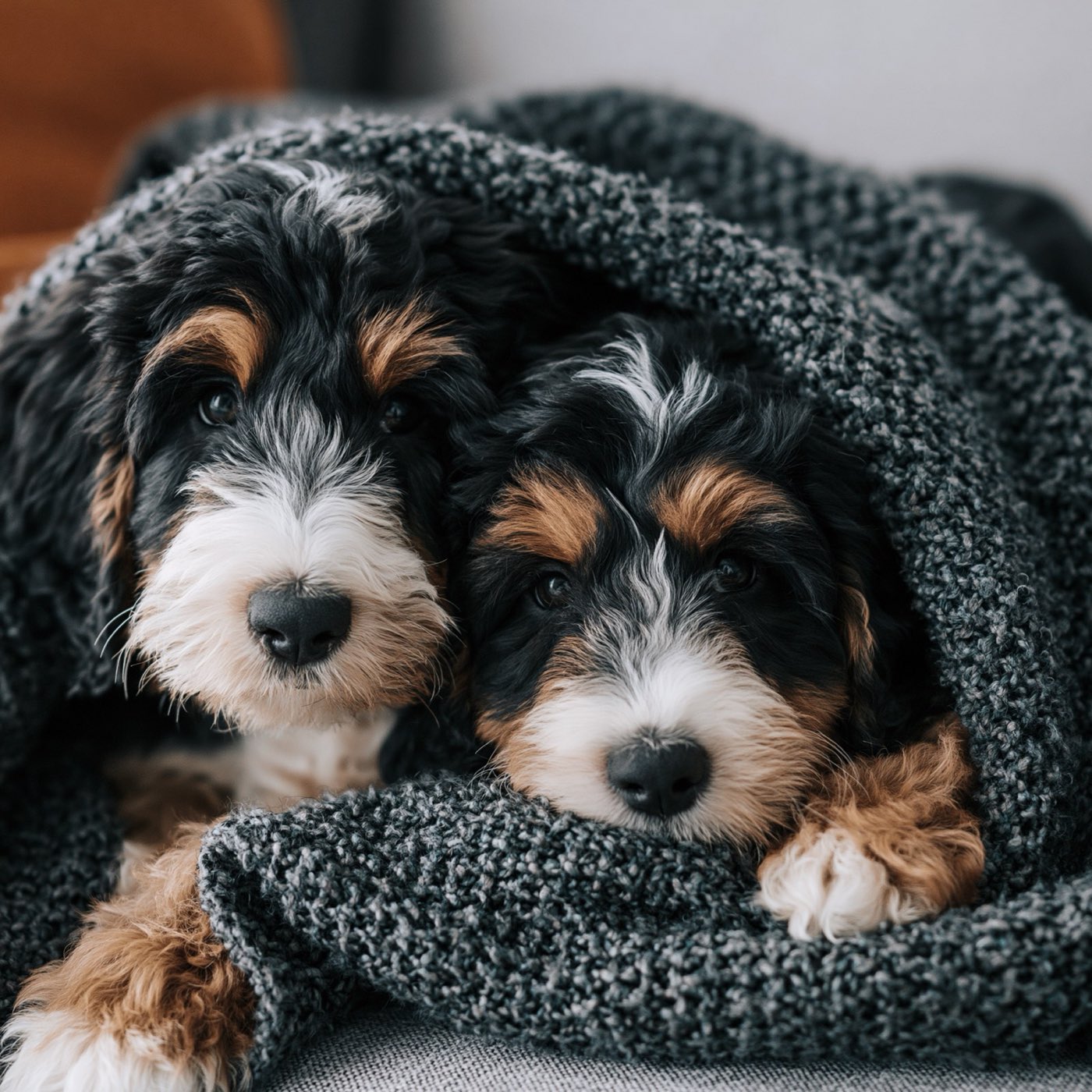
Where to DNA-Test for the ALX4 Blue-Eye Gene
The ALX4 blue-eye variant is reported as a trait by several canine DNA laboratories; a cheek swab is all that is needed. Embark, whose scientists made the discovery, includes blue eyes (ALX4) in its breed and health panels, and a number of single-trait labs now list an ALX4 or blue-eye test on their canine coat-and-color menus. The UC Davis Veterinary Genetics Laboratory, one of the most respected university labs for dog color genetics, offers coat color, merle and white-spotting tests, which is the right place to confirm the other two causes of blue eyes; check their current test directory for ALX4 availability, as lab menus change.
Whatever lab you use, ask for the parent dogs' results and look for the variant's name (ALX4 or blue eyes) on the report. If a breeder cannot show you a report, assume blue eyes are merle-related and ask about the pairing.
- Embark Breed + Health and Breed ID kits: report the ALX4 blue-eye trait; cheek swab, results in 2–4 weeks
- UC Davis Veterinary Genetics Laboratory: coat color, merle (M locus) and white spotting tests; consult their test directory for blue-eye availability
- Orivet (formerly Paw Print Genetics) and other canine labs: check the coat-and-color test menu for 'blue eyes' or 'ALX4'
- Sample: cheek swab for all of the above; no blood draw needed
- Typical result notation: N/N (clear), N/BE or BE/n (one copy), BE/BE (two copies)
ALX4 Blue-Eye Questions
- Is the ALX4 blue-eye gene bad for a dog's health?
No health problems were associated with the ALX4 duplication in the 2018 study. It affects eye pigment only. The blue eyes that come from the merle gene are different: breeding two merle dogs together can produce puppies with hearing and vision problems, which is why responsible breeders never do it.
- Can a brown-eyed dog carry the ALX4 gene?
Yes. The variant has incomplete penetrance, so roughly four in ten single-copy carriers in the original study had brown eyes. Only a DNA test reveals carrier status.
- Can Bernedoodles have blue eyes from ALX4?
Rarely. Neither parent breed carries the variant, so a blue-eyed Bernedoodle is usually merle. ALX4 blue eyes can appear in Doodles with Australian Shepherd or Siberian Husky in the pedigree.
- Will my puppy's blue eyes stay blue?
All puppies are born with bluish eyes that settle by 10–12 weeks. Blue eyes caused by ALX4 or merle stay blue for life; puppy-blue eyes that darken were never going to be blue.
- Is it AXL4 or ALX4?
ALX4. The gene is named for the ALX homeobox family (ALX4 is 'ALX homeobox 4'). It is easy to misspell as AXL4, which is a different gene entirely.
Sources & Further Reading
- Deane-Coe PE, Chu ET, Slavney A, Boyko AR, Sams AJ (2018). Direct-to-consumer DNA testing of 6,000 dogs reveals 98.6-kb duplication associated with blue eyes and heterochromia in Siberian Huskies. PLOS Genetics 14(10): e1007648 — the original peer-reviewed study (open access)
- Same study — free full text at PubMed Central (PMC6171790)
- PubMed abstract — PMID 30286082
- OMIA 001868-9615 — Eye colour, blue, in the dog — Online Mendelian Inheritance in Animals entry with the literature trail
- American Kennel Club — Why do Siberian Huskies have blue eyes? — plain-English explanation of the discovery
- Discover Magazine — Genetic testing reveals why Huskies have blue eyes — science reporting on the study
- UC Davis Veterinary Genetics Laboratory — Find dog DNA tests — coat color, merle and white-spotting tests; check for current blue-eye offerings
- Embark Veterinary — Dog DNA tests — the lab that made the discovery; reports the ALX4 blue-eye trait
Curious About a Blue-Eyed Puppy?
Ask us about the genetics behind any puppy on our Available Puppies page. We are glad to walk you through the parents' DNA results.