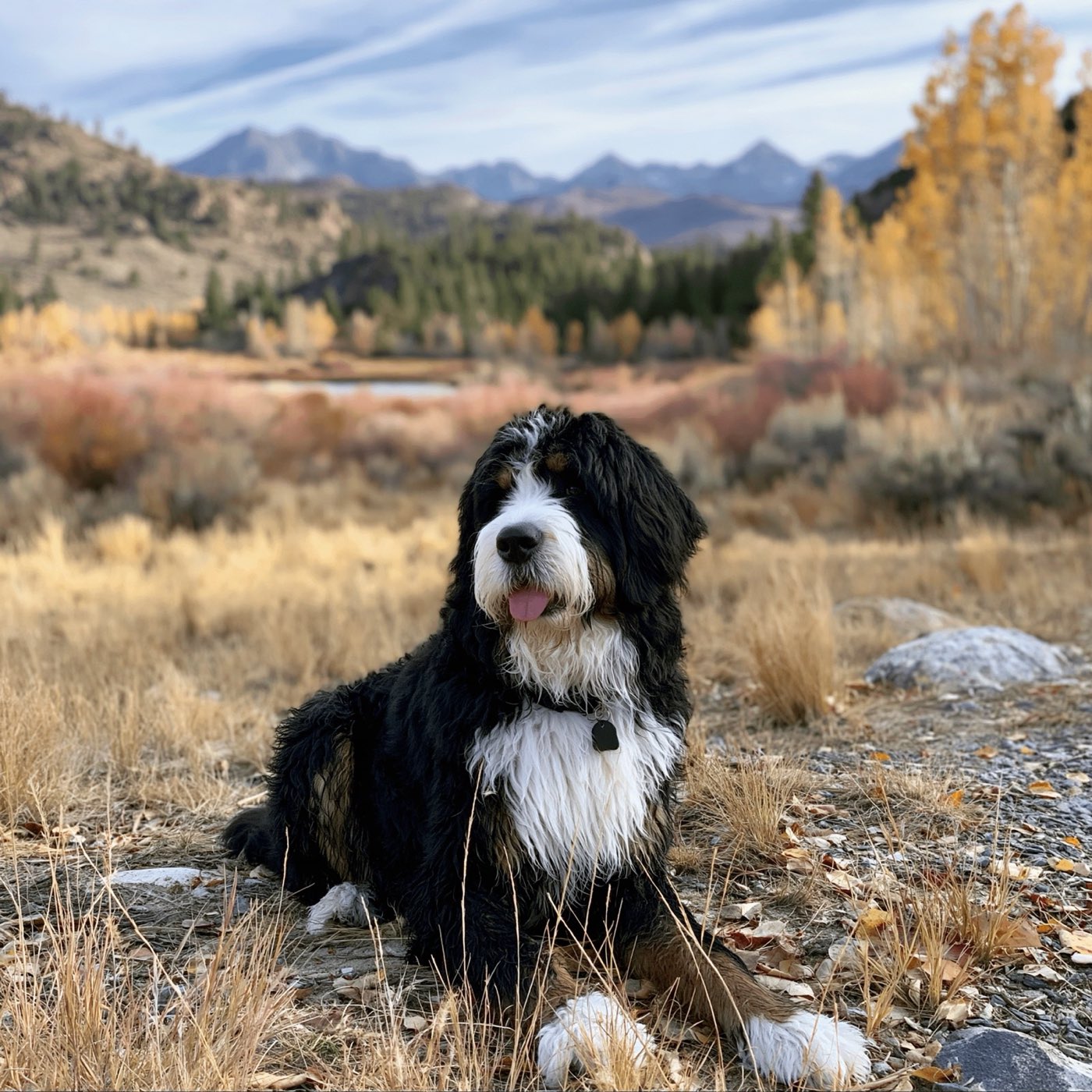
Standard Bernedoodle
Bernese × Standard Poodle. The biggest, calmest and most Bernese-like. Best for active families with room to roam and a vehicle big enough for a 70–90 lb co-pilot.
The Bernedoodle is a cross between the Bernese Mountain Dog and the Poodle: a gentle, goofy, people-first companion that comes in three sizes and a range of coat types and colors. This guide covers Standard, Mini and Tiny Bernedoodle sizes, curly, wavy and straight coats, tri-color, merle and phantom markings, shedding and allergies, temperament, and lifespan, so you know exactly what to expect from a Bernedoodle puppy.
A Bernedoodle (sometimes written Bernadoodle or Bernese Mountain Poo) pairs the calm, loyal, family-devoted Bernese Mountain Dog with the intelligent, athletic, low-shedding Poodle. The first intentional Bernedoodle litters were bred in the early 2000s, and the cross has since become one of the most sought-after Doodle breeds in the United States.
The goal of a well-bred Bernedoodle is simple: the Bernese temperament and tri-color look in a healthier, longer-lived, lower-shedding package. Bernedoodles are not recognized by the American Kennel Club because they are a hybrid, but both parent breeds are, and reputable breeders health-test the parents to the standards of each breed club.
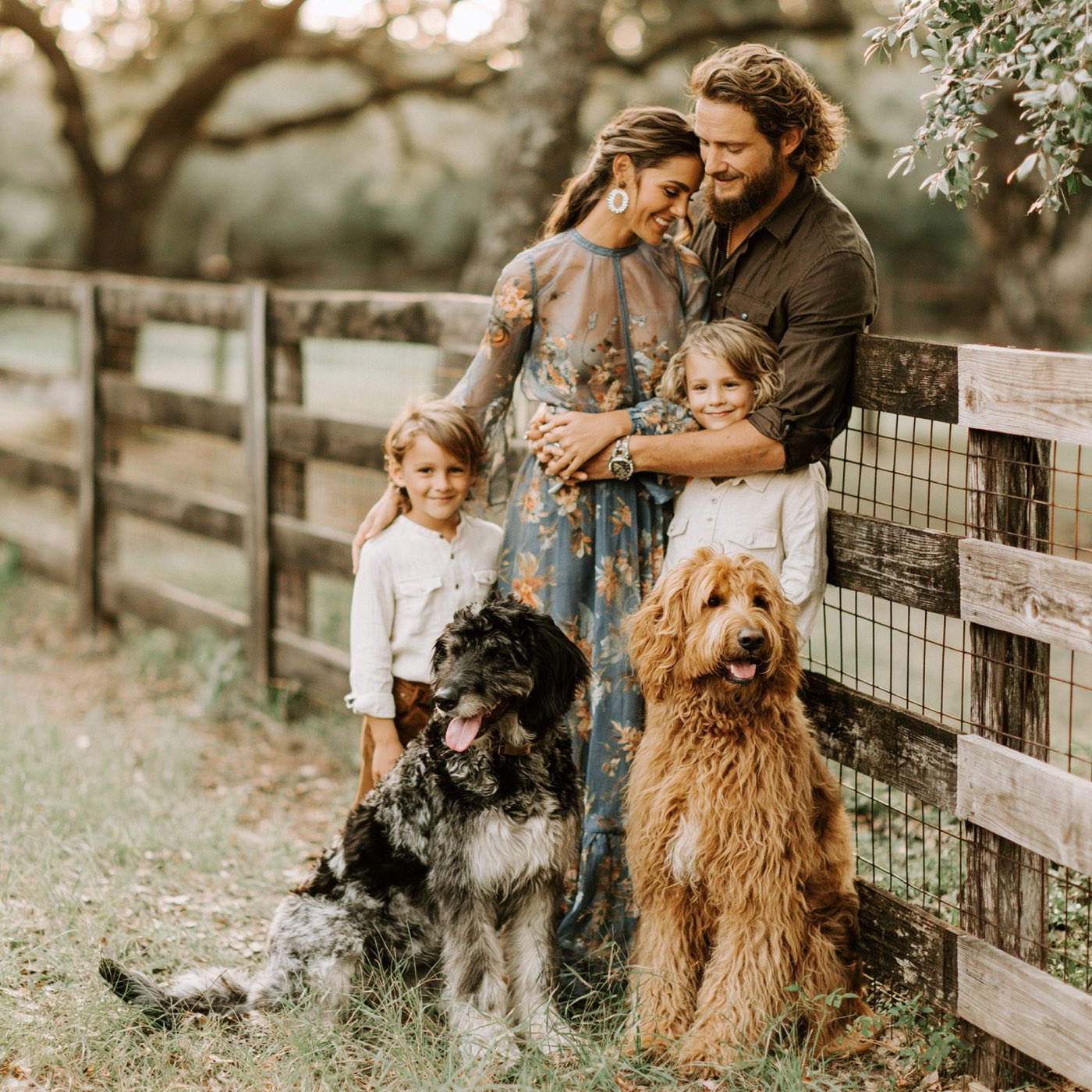
Bernedoodle size is set almost entirely by the Poodle parent. Breed a Bernese to a Standard Poodle and you get a Standard Bernedoodle; use a Miniature Poodle and you get a Mini Bernedoodle; a Toy Poodle (usually through a Mini Bernedoodle dam) produces the Tiny or Toy Bernedoodle. Within each size there is still real variation, especially in F1 litters, so a responsible breeder quotes a range, not a number.
At Still Water Doodles we focus on Standard and Mini Bernedoodles, the two sizes best suited to active Utah families who hike, camp and ski with their dogs.
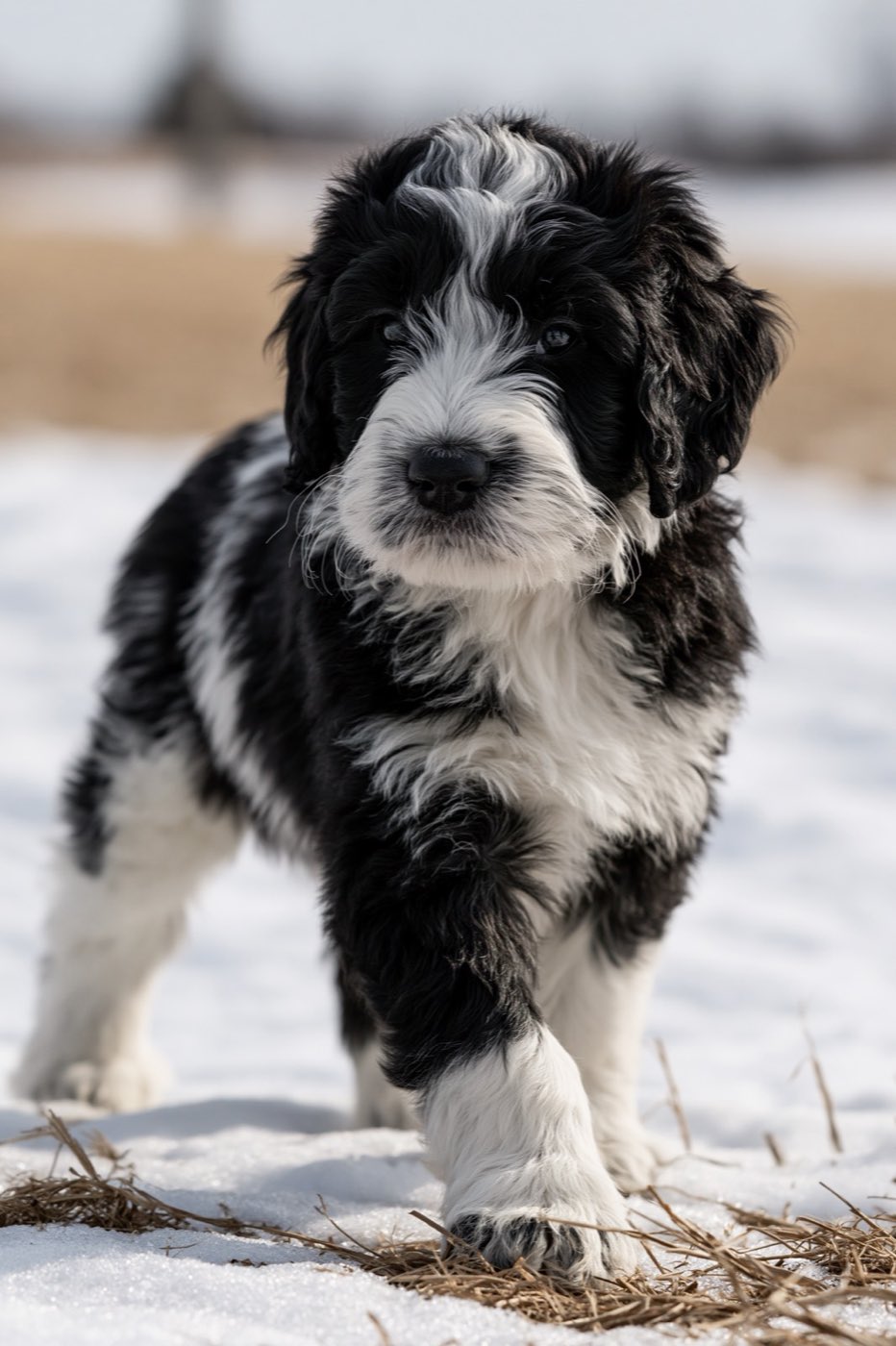
Coat type is the question we get asked most, because it drives shedding, grooming and allergy-friendliness. Three genes do most of the work: the curl gene (KRT71) controls curly versus straight hair, the furnishings gene (RSPO2) gives the Doodle beard and eyebrows and is strongly linked to low shedding, and the length gene (FGF5) makes the coat long. A 2009 study in Science found that variants of these three genes account for about 95 percent of coat variation across dog breeds.
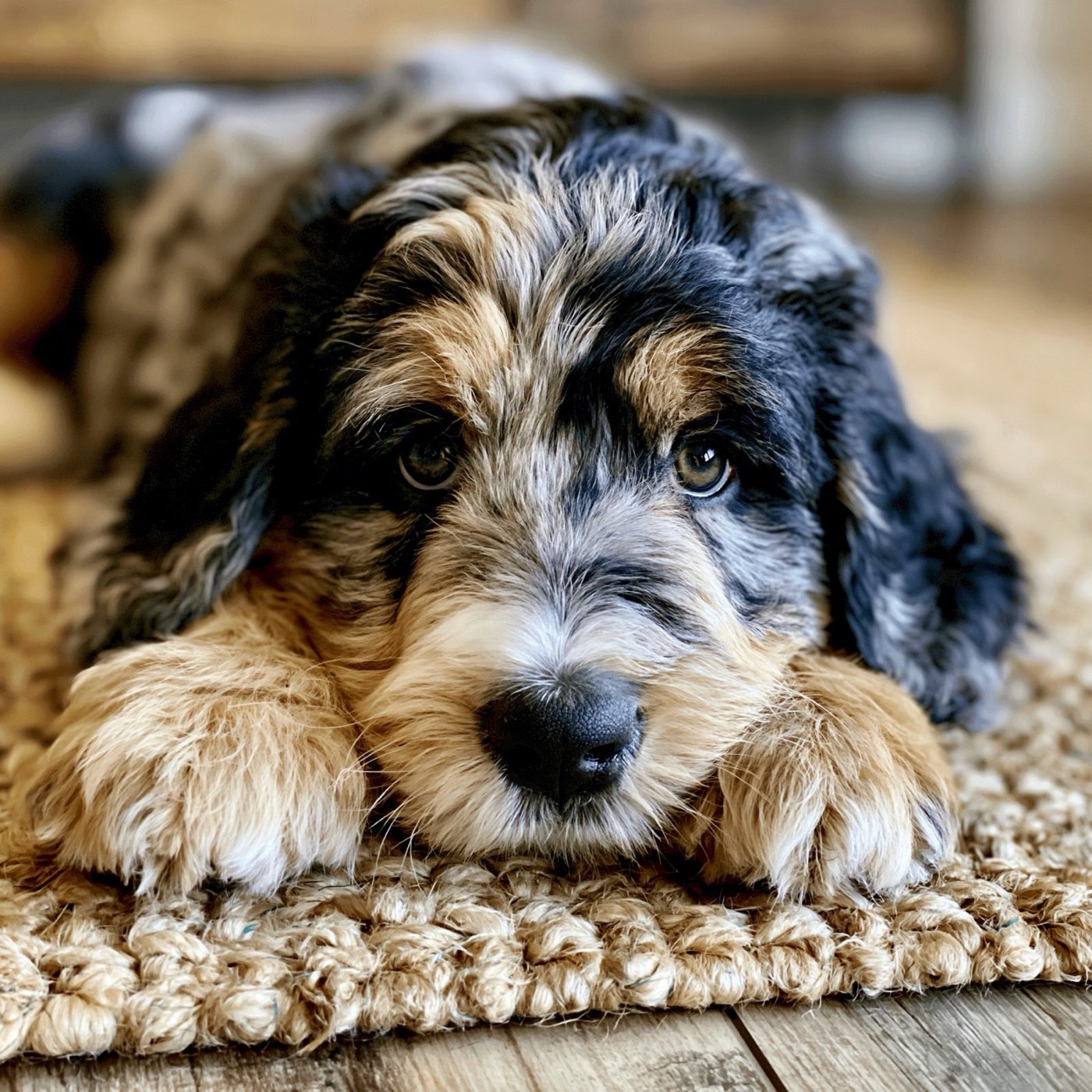
The signature Bernedoodle look is tri-color: a black base with rust (tan) points over the eyes, on the cheeks and legs, and white on the chest, blaze, muzzle and feet, exactly like a Bernese Mountain Dog. But because the Poodle brings so much color genetics to the cross, Bernedoodles come in far more patterns than their Bernese parent.
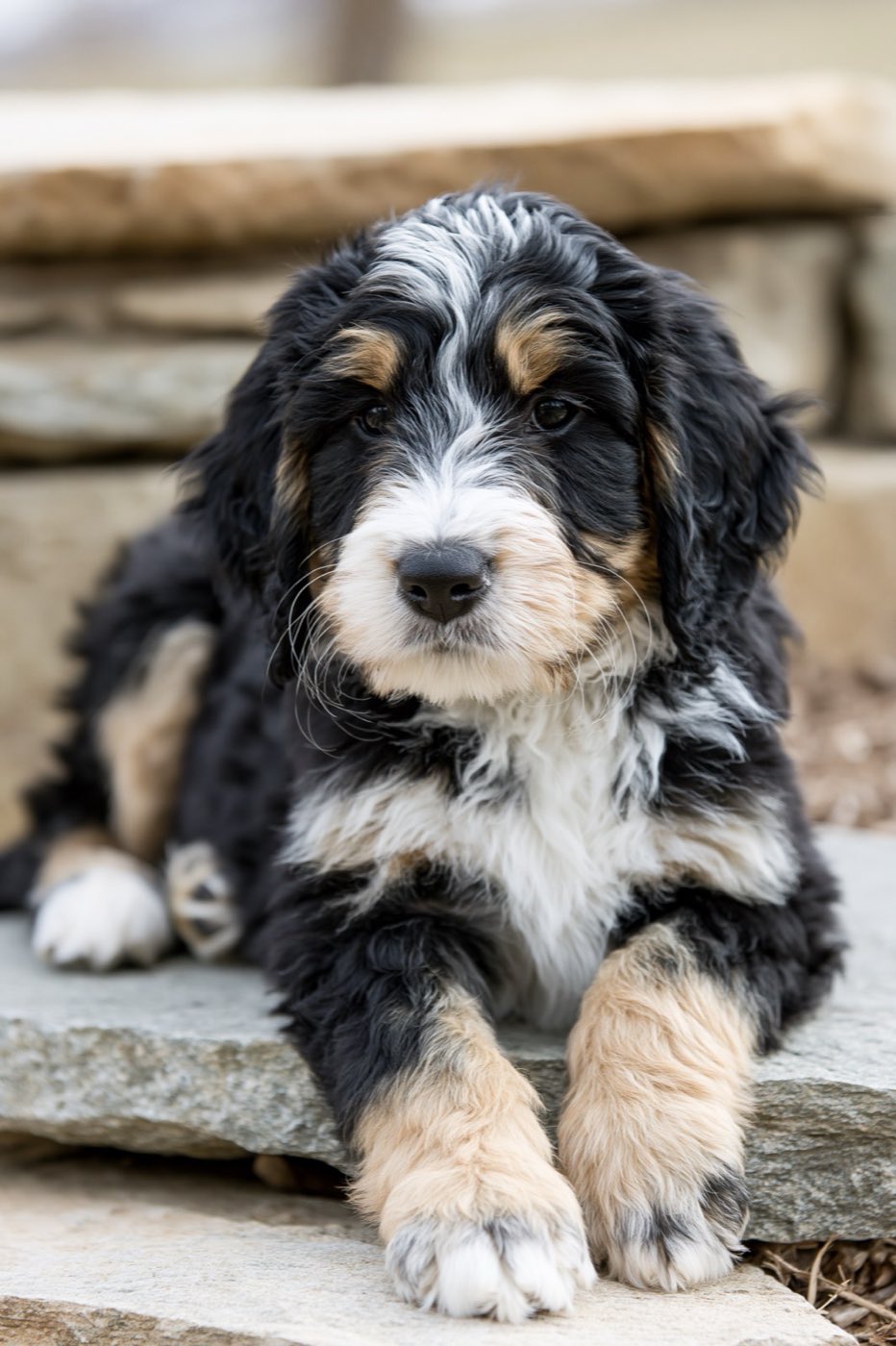
Bernedoodles are affectionate, goofy and loyal. They tend to be gentle with children, friendly with other dogs, and happiest when they are part of whatever the family is doing. Most inherit the Poodle's trainability, which makes house-training, crate training and basic manners straightforward with consistency and positive reinforcement.
They do need daily exercise and mental work. A Standard Bernedoodle is a good hiking, running and snowshoe partner; a Mini is a little easier in an apartment or small yard but still wants a daily walk and play. Like the Bernese, Bernedoodles can be sensitive and slightly stubborn as adolescents, and they bond so closely that they should not be left alone for long stretches every day. Early socialization, which we begin in our home with Early Neurological Stimulation and Puppy Culture protocols, is the best predictor of a confident adult dog.
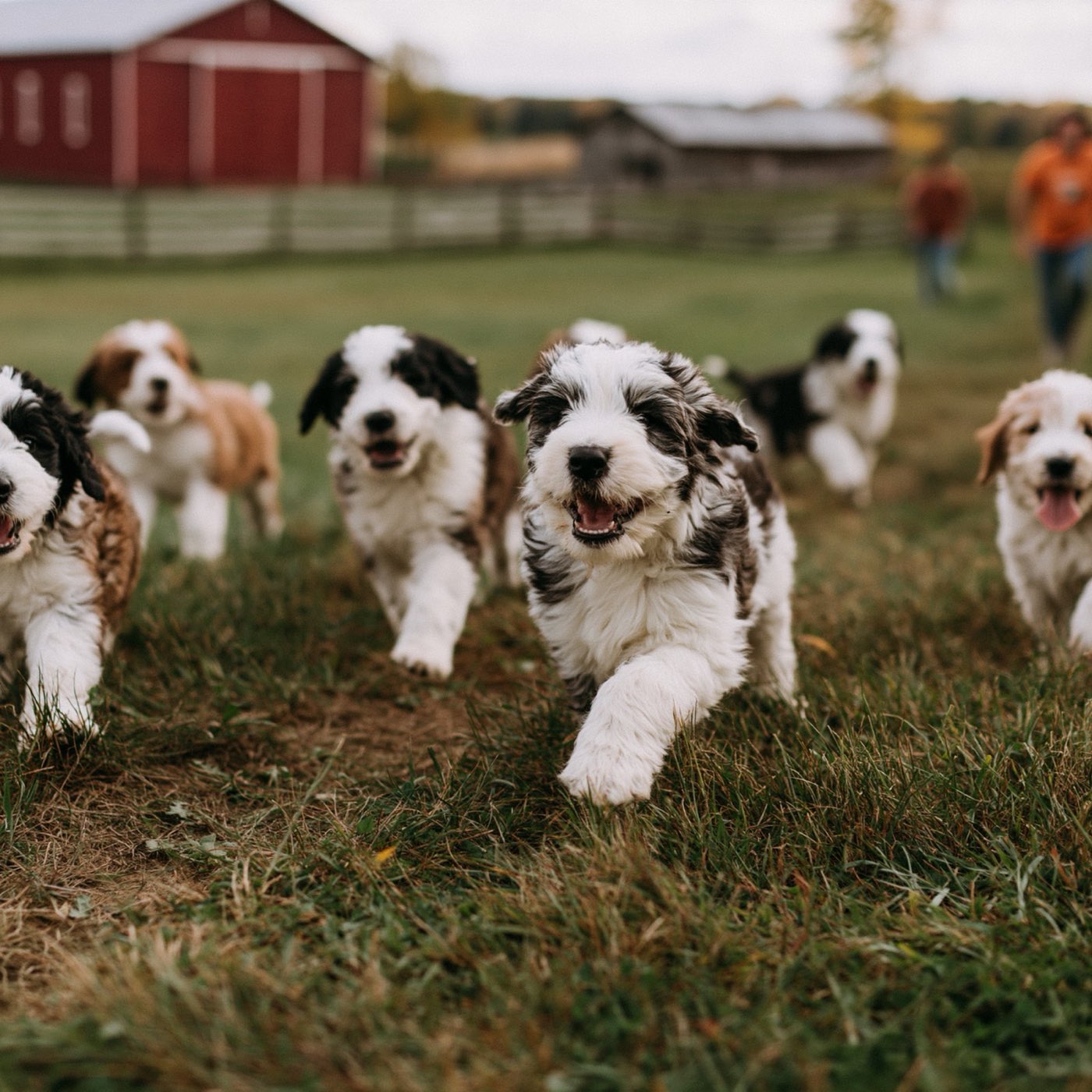
A well-bred Bernedoodle typically lives 12–15 years for a Mini and 12–14 years for a Standard, noticeably longer than the Bernese Mountain Dog average. Hybrid vigor helps, but it is not a guarantee, which is why parent health testing matters more than the label on the puppy.
At Still Water Doodles every parent dog is screened with OFA hip and elbow evaluations, an eye exam, and a DNA panel that covers the conditions known in both parent breeds, including degenerative myelopathy, von Willebrand disease and progressive retinal atrophy. Ask any breeder to show you the actual certificates, not just a sentence on a website.
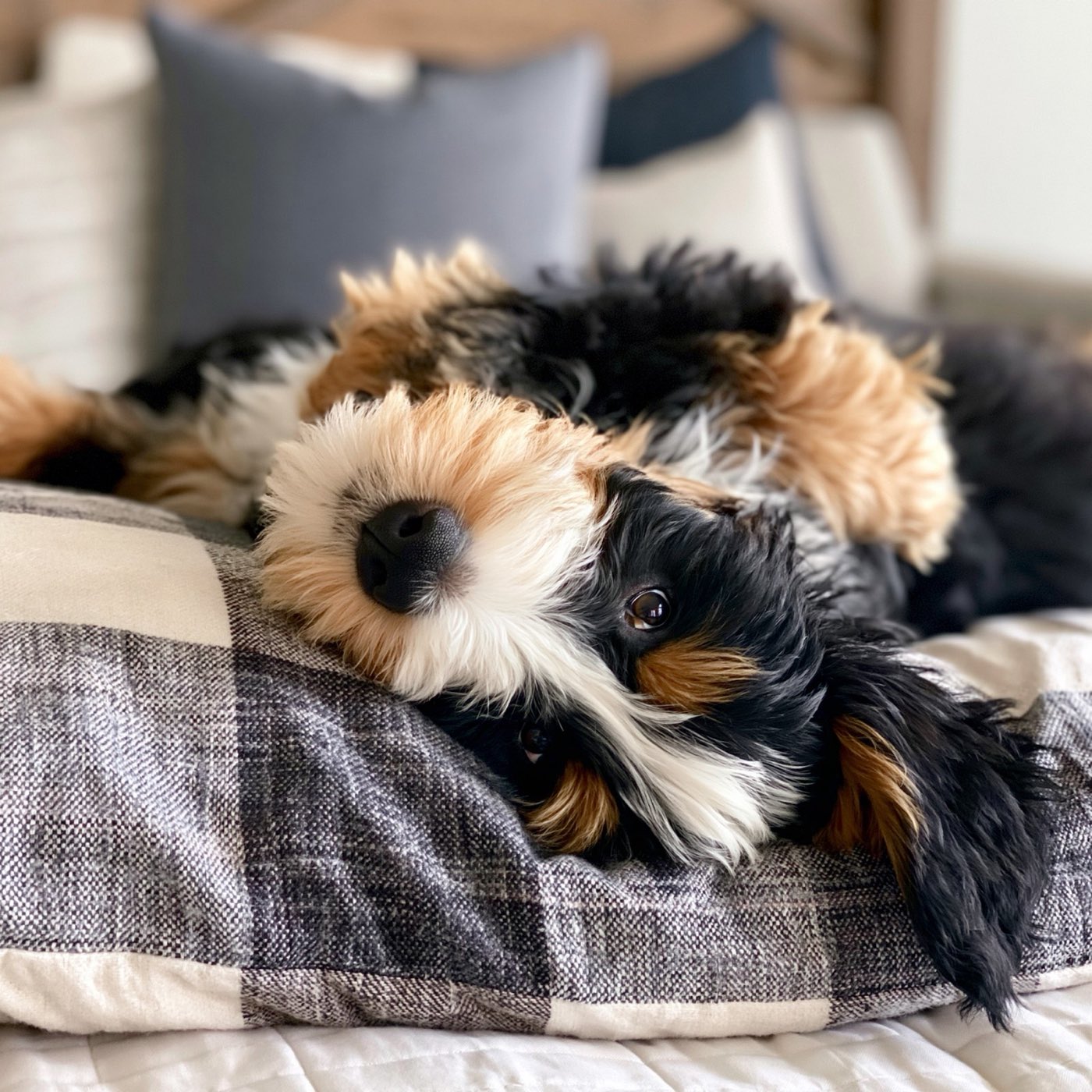
Bernese × Standard Poodle. The biggest, calmest and most Bernese-like. Best for active families with room to roam and a vehicle big enough for a 70–90 lb co-pilot.
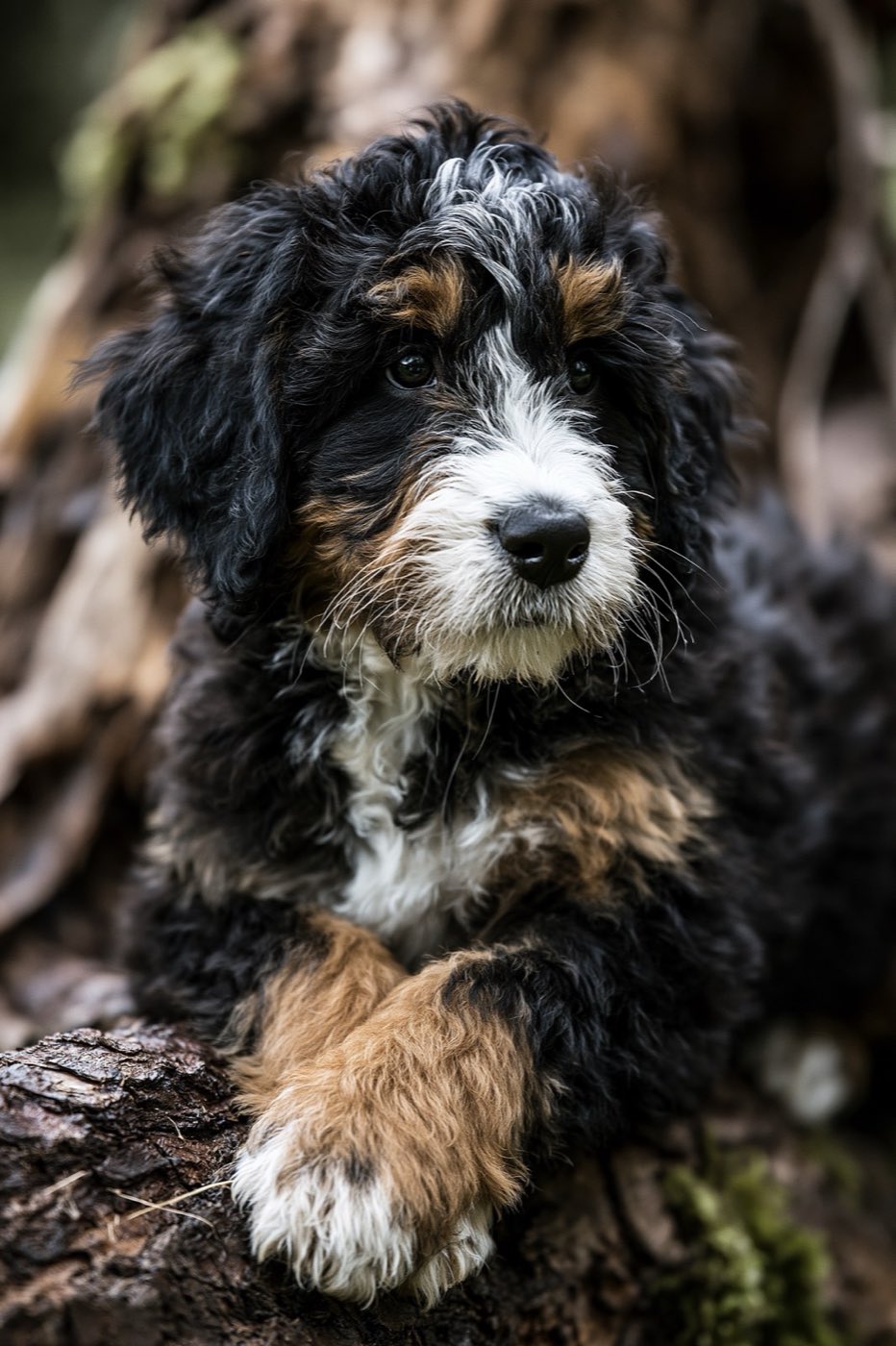
Bernese × Miniature Poodle (or F1b/multigen). The most popular size: big enough to hike, small enough for a car seat and a city yard.
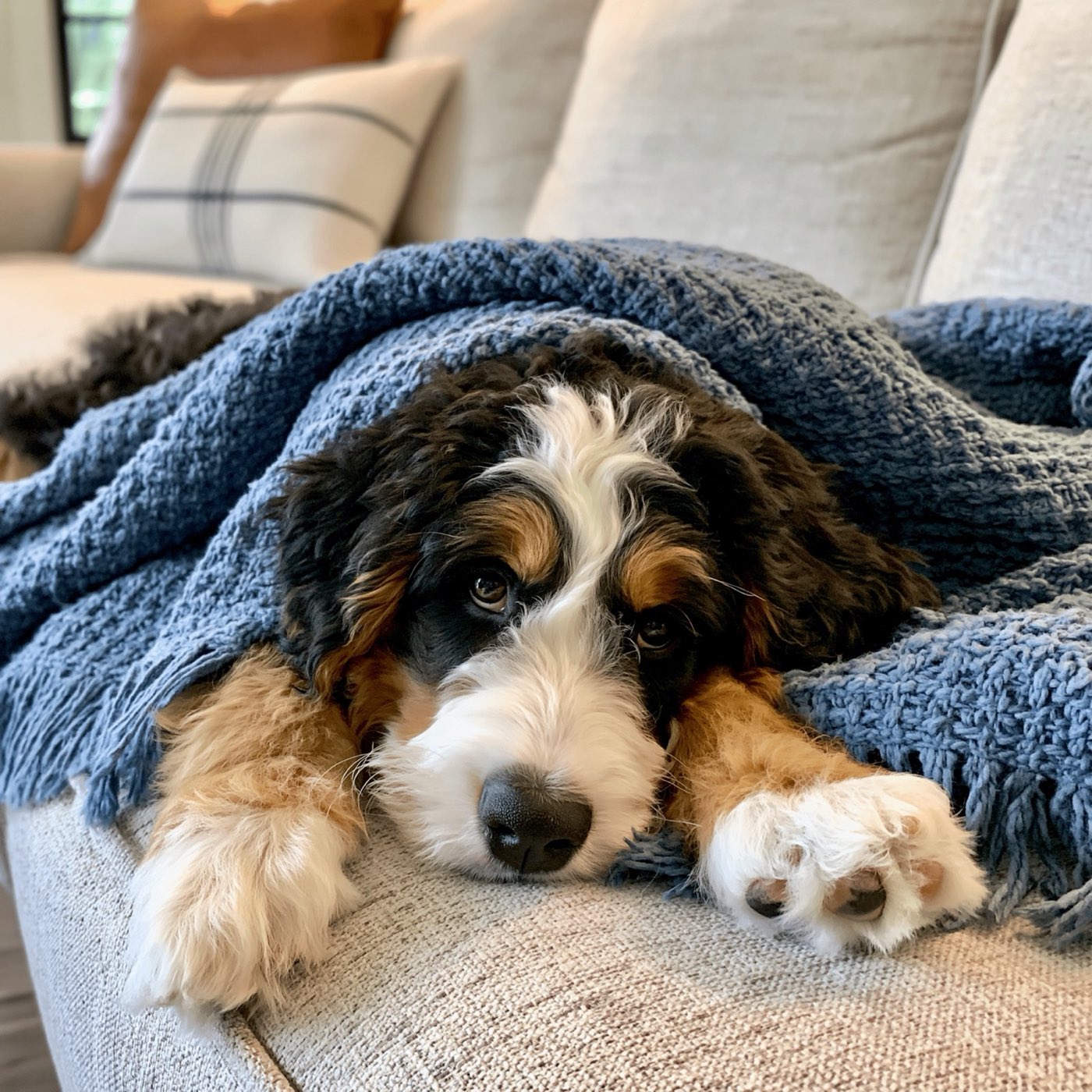
Mini Bernedoodle × Toy Poodle. A lap-sized Bernedoodle for apartments, travelers and seniors. We do not currently breed Tiny Bernedoodles.
Most Bernedoodles shed very little. Curly and wavy coats with furnishings (the beard and eyebrows) are the lowest-shedding; a straight, unfurnished coat sheds more like a Bernese. No dog is 100 percent hypoallergenic, but many allergy-sensitive families live comfortably with a furnished Bernedoodle. If allergies are a concern, tell us and we will steer you toward the right coat and generation.
A Mini Bernedoodle usually finishes at 25–50 pounds and 18–22 inches at the shoulder, with females on the smaller end. Puppies from the same litter can vary by 10–15 pounds, so we give every family a range based on the parents, not a promise.
Yes. The Bernese side brings patience and loyalty, the Poodle side brings trainability and playfulness. Bernedoodles are typically gentle with children and other pets, and they thrive on being included in family life. They do not do well left alone for long days.
Mini Bernedoodles commonly live 12–15 years and Standards 12–14 years, compared with 7–10 years for a purebred Bernese Mountain Dog. Health-tested parents, a healthy weight and regular veterinary care make the biggest difference.
An F1 is a Bernese bred to a Poodle (50/50). An F1b is an F1 Bernedoodle bred back to a Poodle (roughly 75 percent Poodle), which makes curlier, more reliably low-shedding coats. Our Doodle Generations page walks through every generation.
Well-bred Bernedoodle puppies from health-tested parents typically run $4,000–$6,500 depending on size, color and generation. Our puppies are $5,500 and include a written health guarantee, microchip, vaccinations, deworming, early training and lifetime breeder support.
Join our waitlist to be first in line for upcoming Standard and Mini Bernedoodle litters raised in our Salt Lake City home.