F1
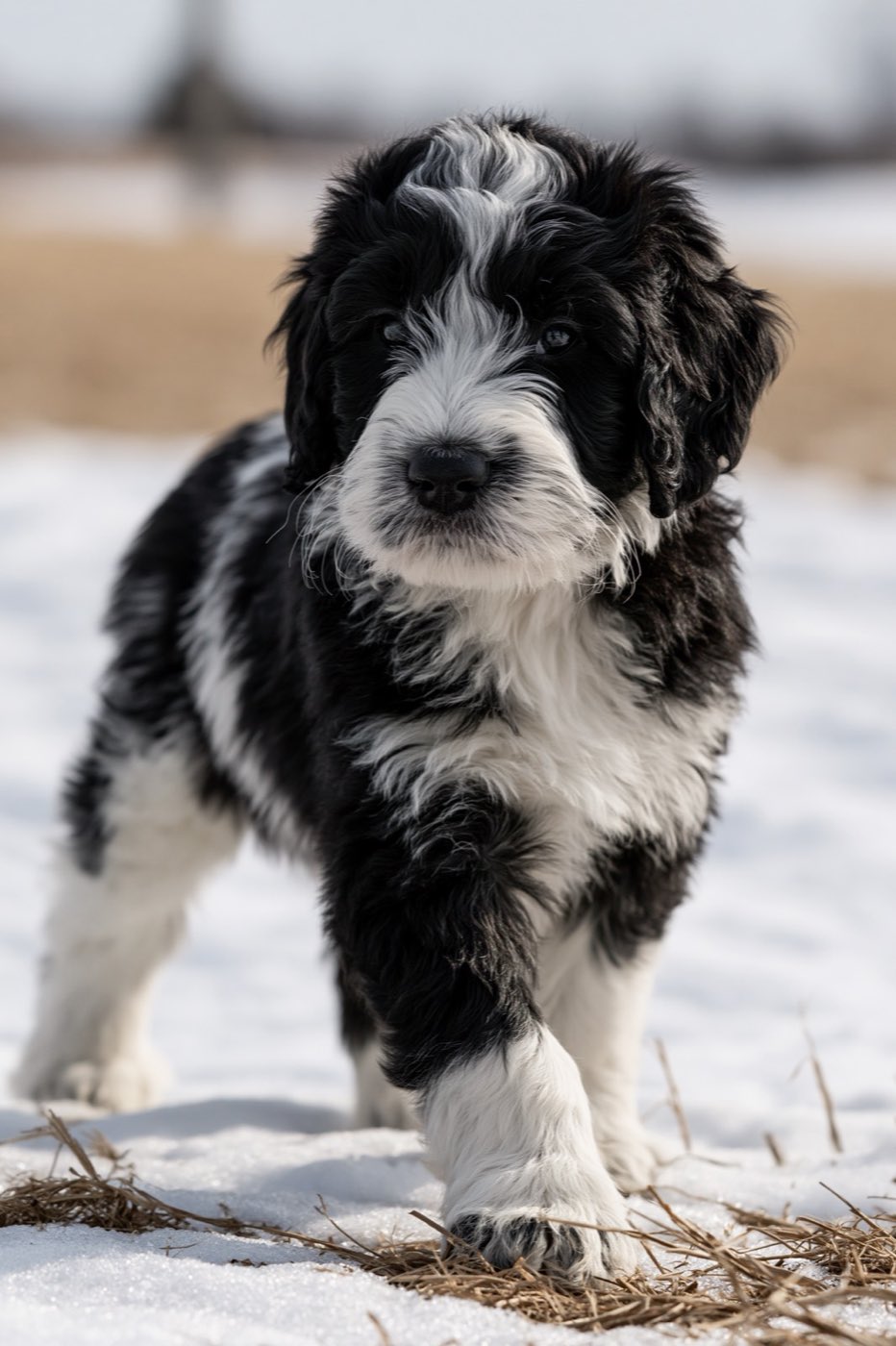
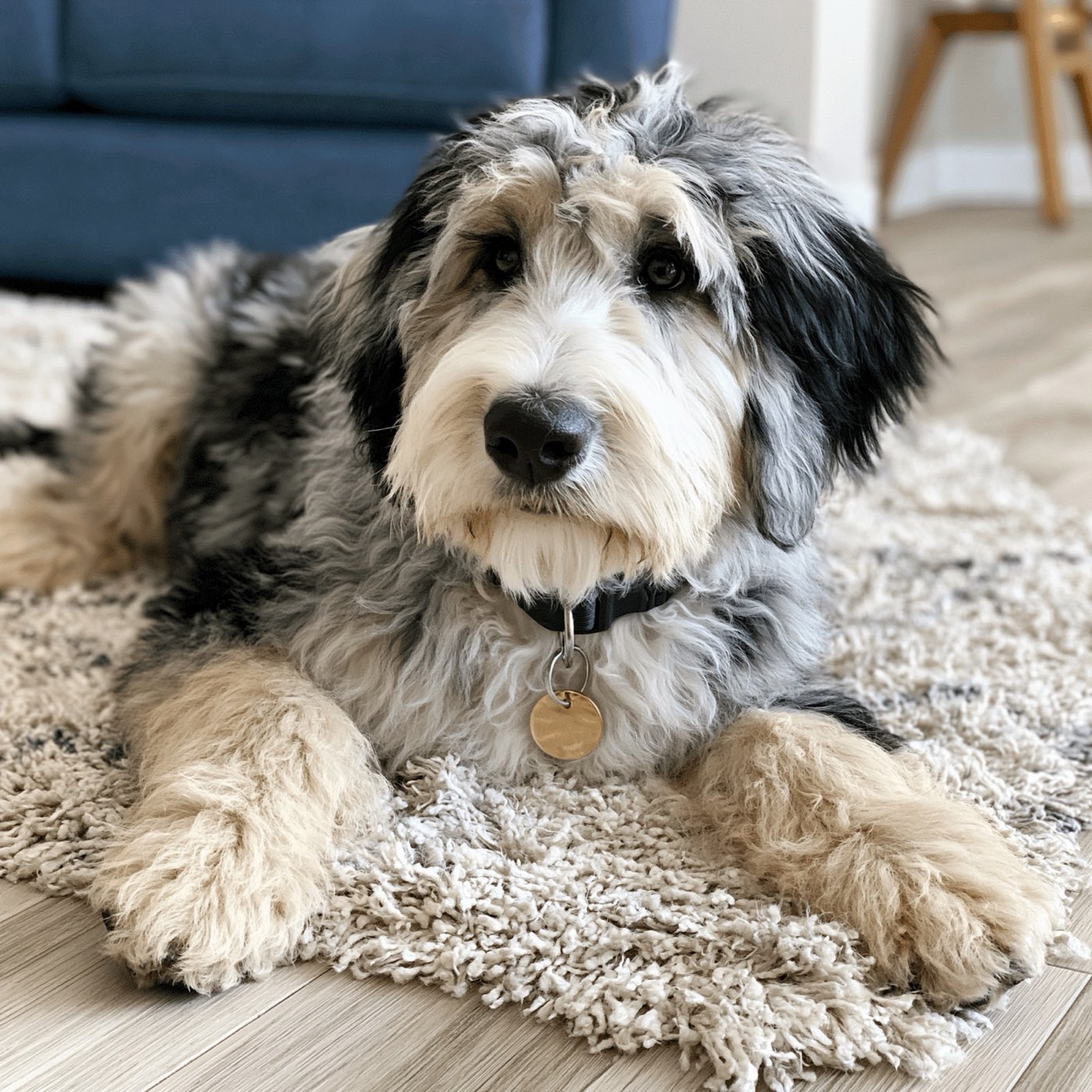
Bernese × Poodle. 50/50. Wavy coat, light shedding, most Bernese-like.
F1, F1b, F2b, multigen: the letters on a Doodle listing describe how far a puppy is from the original Bernese-to-Poodle cross, and they are the single best predictor of coat, shedding and size. Here is what every generation means, with the pros and cons of each, so you can choose the right Bernedoodle generation for your family.
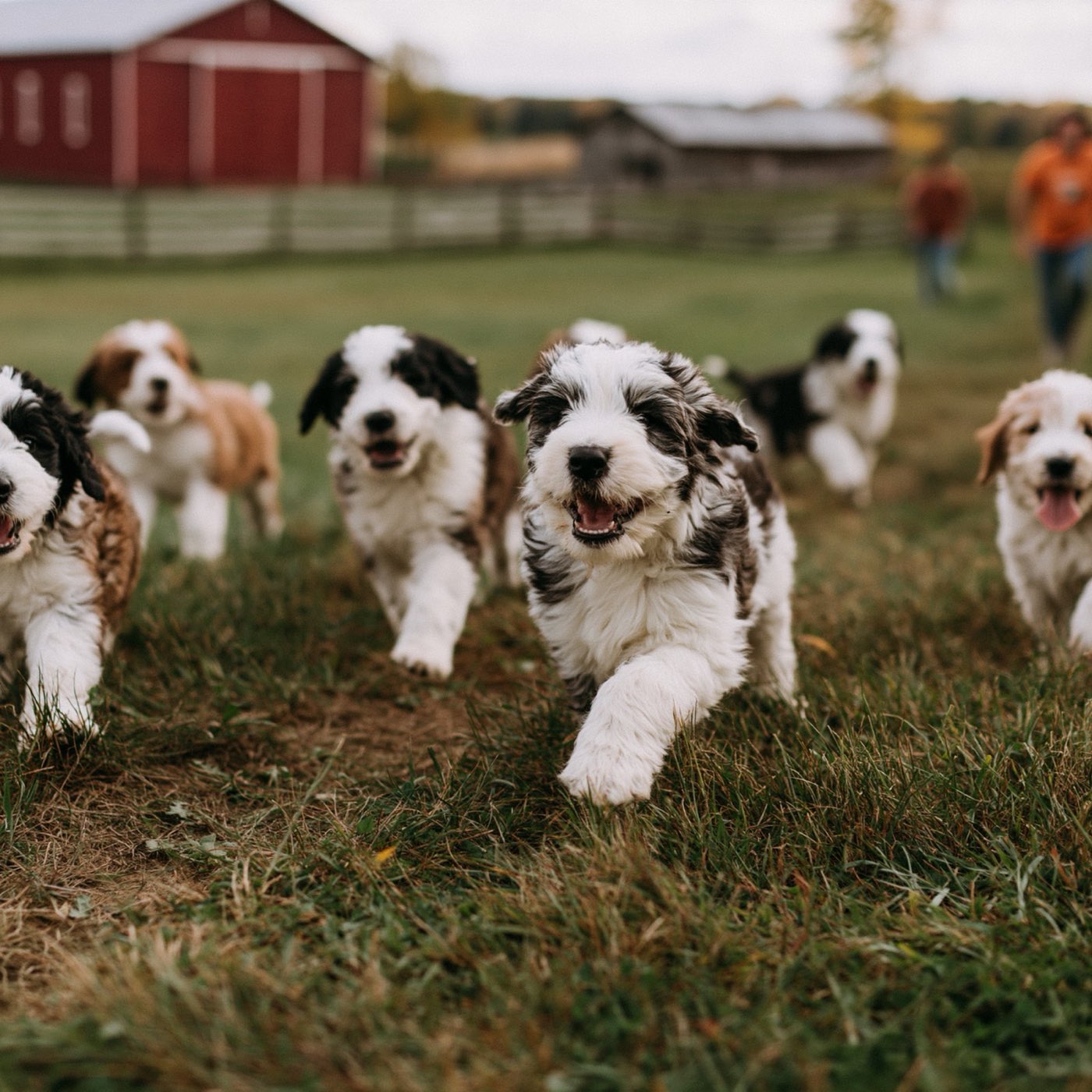
The F stands for filial generation, borrowed from genetics. F1 is the first cross between two purebred parents. Each b means a backcross to a purebred Poodle. A number higher than 1 means two Doodles were bred together. The label tells you the approximate percentage of Poodle in the puppy, which in turn tells you how likely a curly, low-shedding, furnished coat is.
Percentages are averages, not guarantees. Every puppy inherits a random half of each parent's genes, so two F1 littermates can look quite different, while a multigen litter from DNA-tested parents can be remarkably uniform.
An F1 Bernedoodle is a purebred Bernese Mountain Dog bred to a purebred Poodle. This generation shows the most hybrid vigor and the most Bernese in looks and temperament: the blocky head, the tri-color pattern and that calm, soulful Berner personality. Coats are usually wavy, sometimes straight, occasionally curly, and shedding ranges from very light to moderate.
F1 is a wonderful choice for families who want the classic Bernedoodle look and are not dealing with serious allergies.
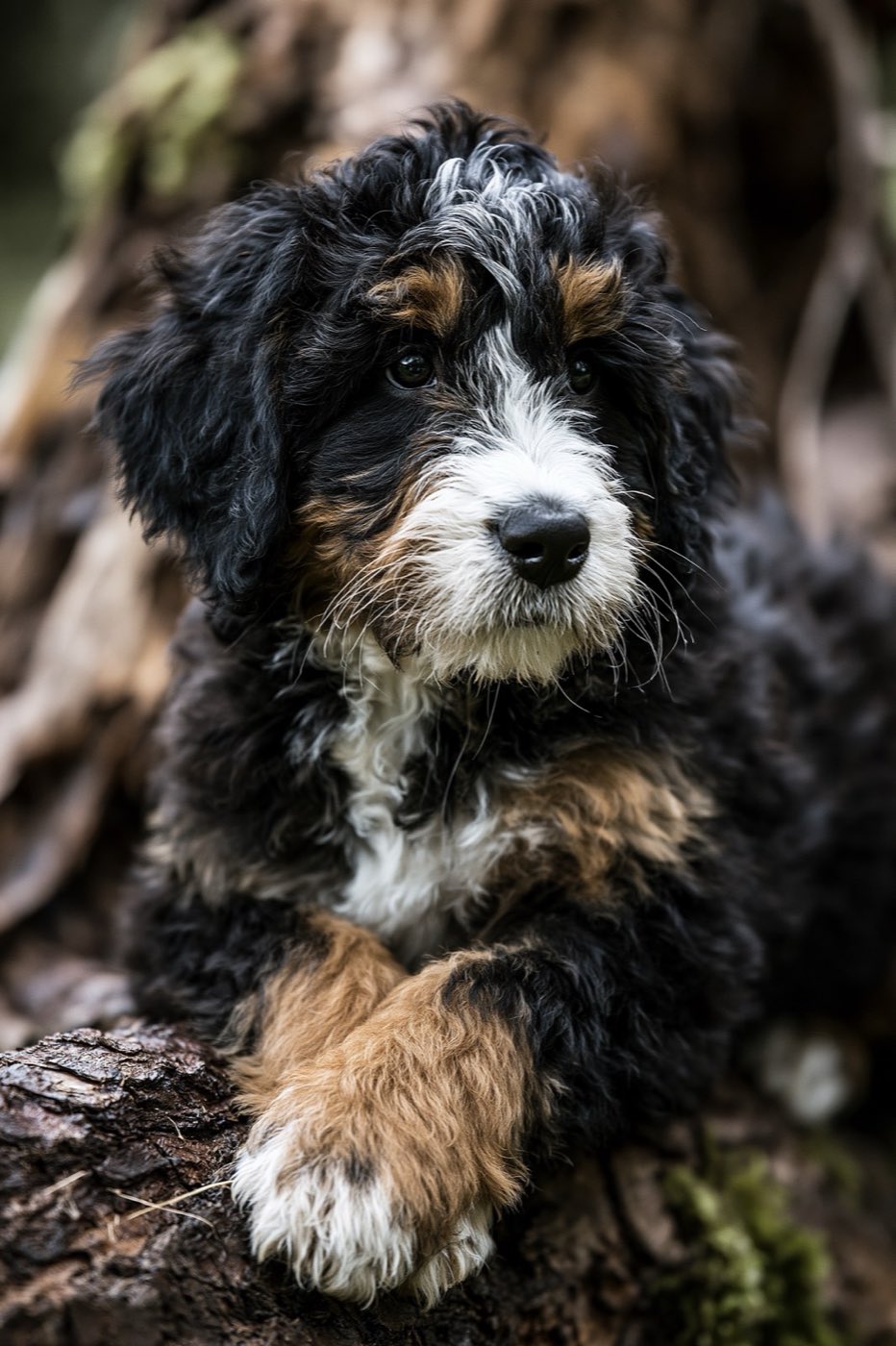
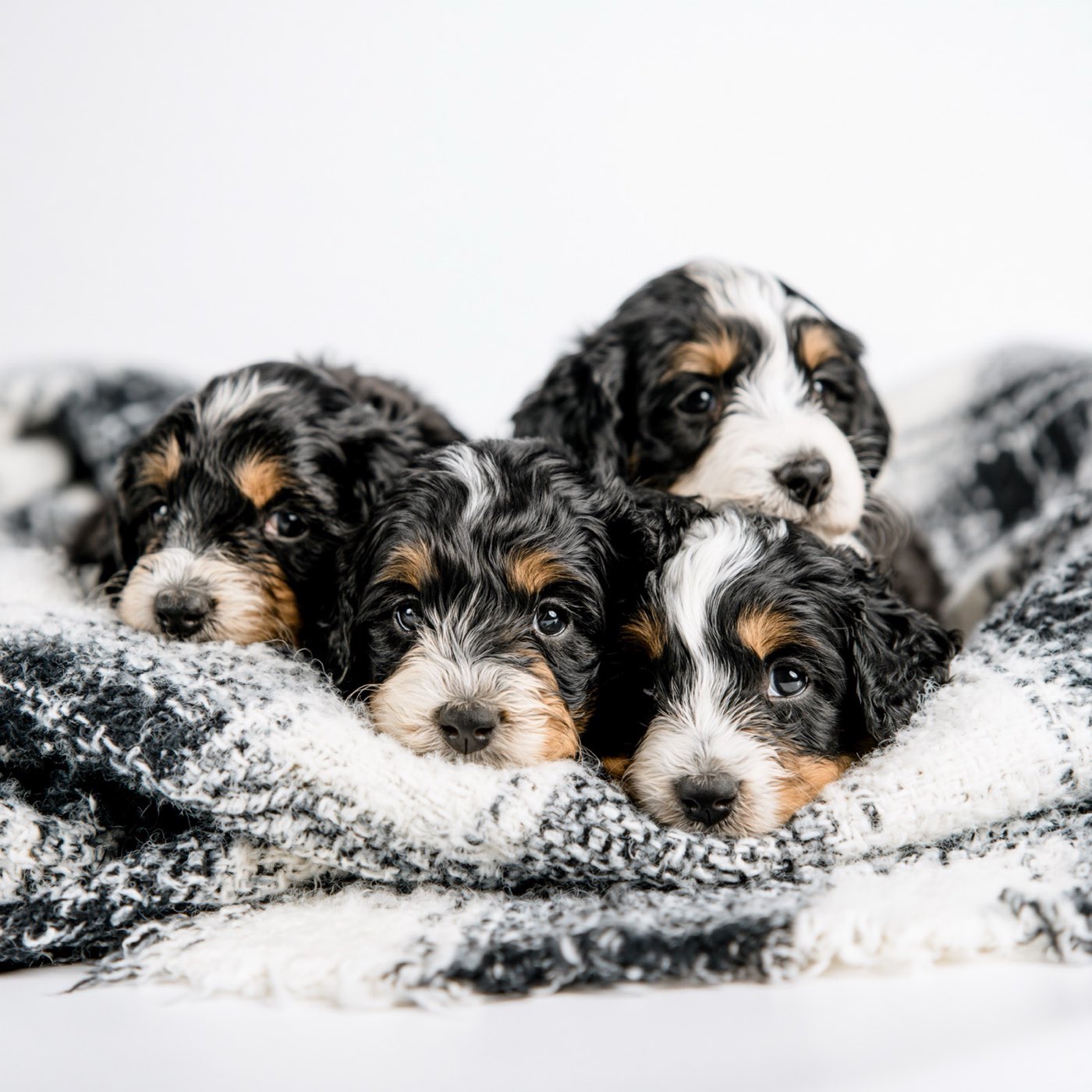
An F1b Bernedoodle is an F1 Bernedoodle bred back to a Poodle. The extra Poodle makes the coat curlier and far more reliably low-shedding, which is why the F1b is the generation most often recommended for families with allergies. F1b puppies are usually a little smaller and more athletic than their F1 parent, with slightly more Poodle in their personality: quick, clever and playful.
Most F1b Bernedoodles still carry the tri-color pattern, though it can be softer, and merle and phantom patterns are common in this generation.
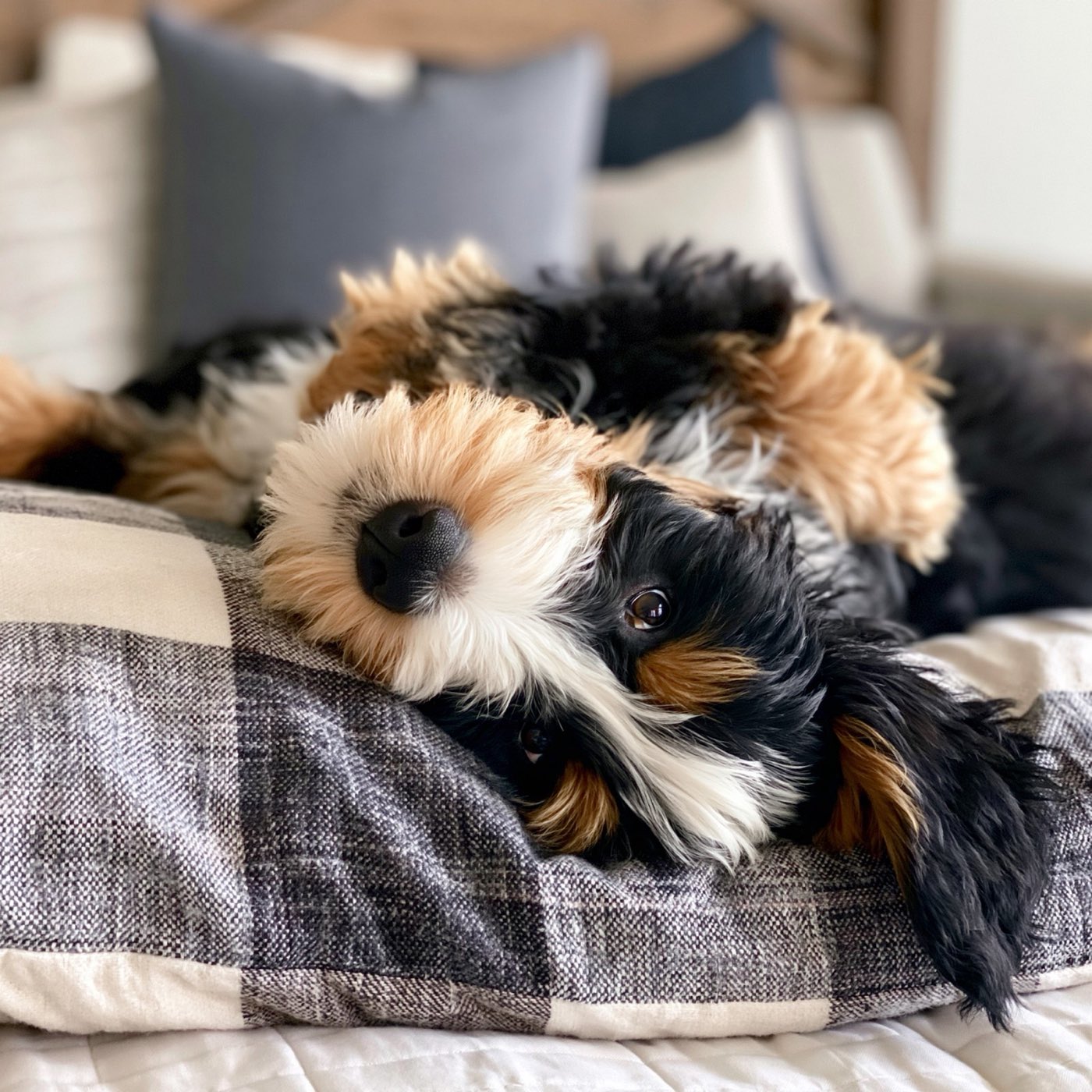
Beyond F1b the labels get crowded. F1bb is an F1b bred back to a Poodle again (about 87.5 percent Poodle): very curly, very low-shedding, and often more Poodle than Bernese in appearance. F2 is two F1 Bernedoodles bred together; it is the least predictable generation, because the puppies can land anywhere from a straight, shedding Bernese coat to a curly Poodle coat, and it loses the hybrid-vigor advantage of the F1. F2b is an F2 (or F1) bred to a Poodle, and multigen (sometimes called F3 or Australian-style) means both parents are Bernedoodles of F1b or later generations.
Multigen is where experienced breeders do their best work: with DNA coat testing of both parents, a multigen litter can be bred to be uniformly furnished, wavy-to-curly and non-shedding while keeping the tri-color Bernese look. That is the direction our program is heading.
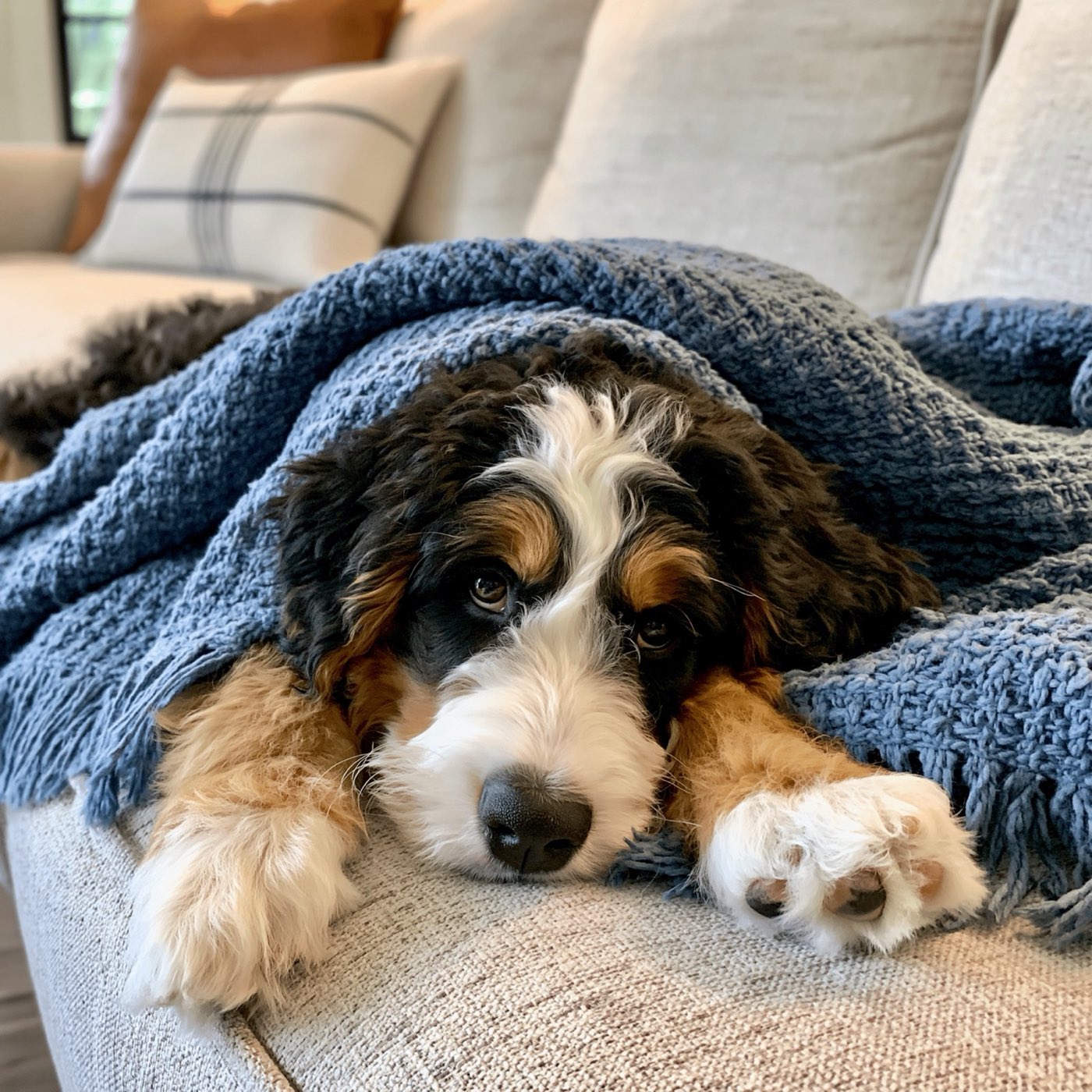
There is no single best generation; there is a best generation for your household. Want the most Bernese look and personality with only mild shedding? Choose an F1. Have allergies, or simply want the least hair on the couch? Choose an F1b or a DNA-tested multigen. Want a smaller, athletic companion with a plush coat? A Mini F1b is hard to beat.
Whatever generation you choose, ask the breeder two questions: have both parents been health tested through OFA and a DNA panel, and have the parents been coat-tested for furnishings and curl. Those answers will tell you more about your puppy than the F-label ever will.
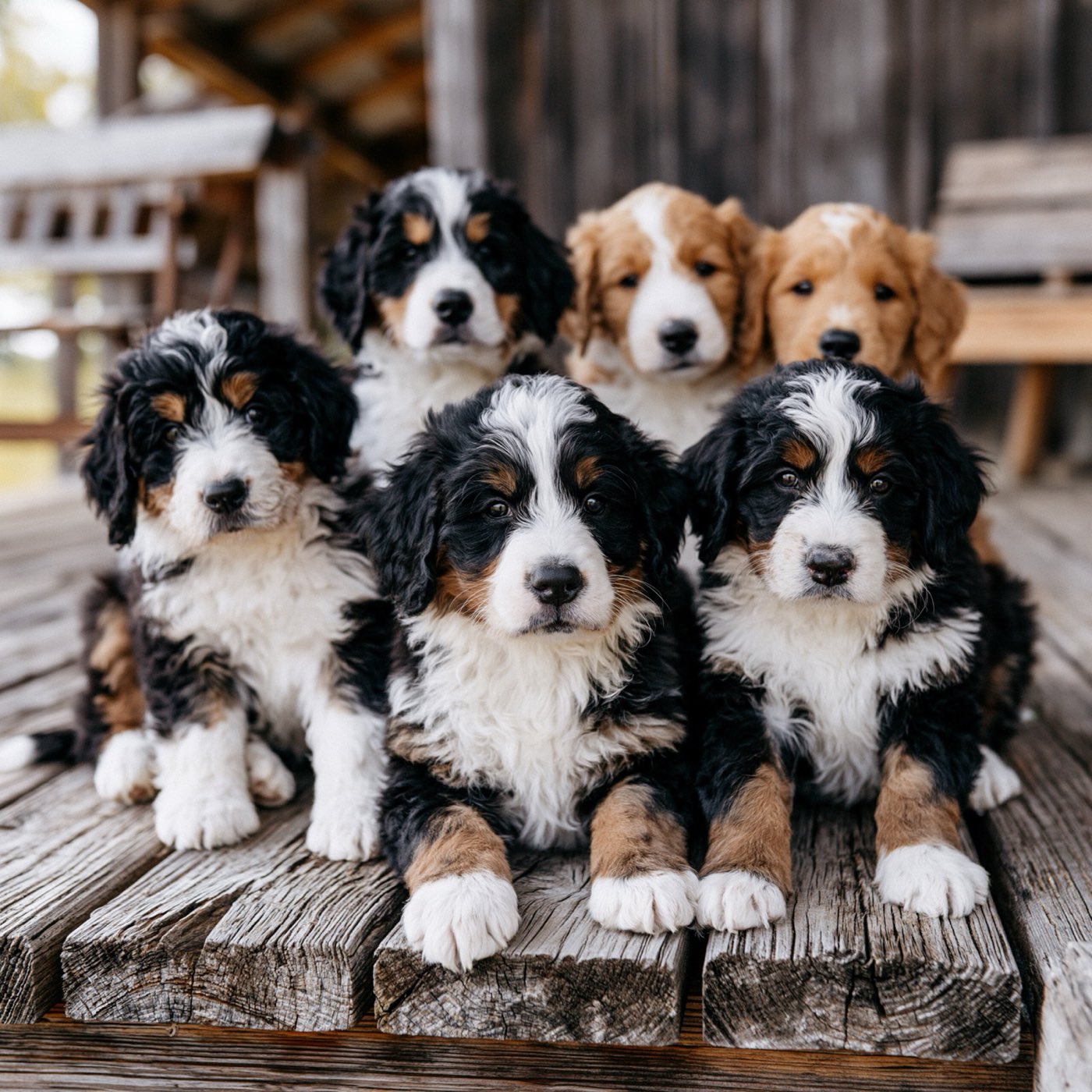
Bernese × Poodle. 50/50. Wavy coat, light shedding, most Bernese-like.
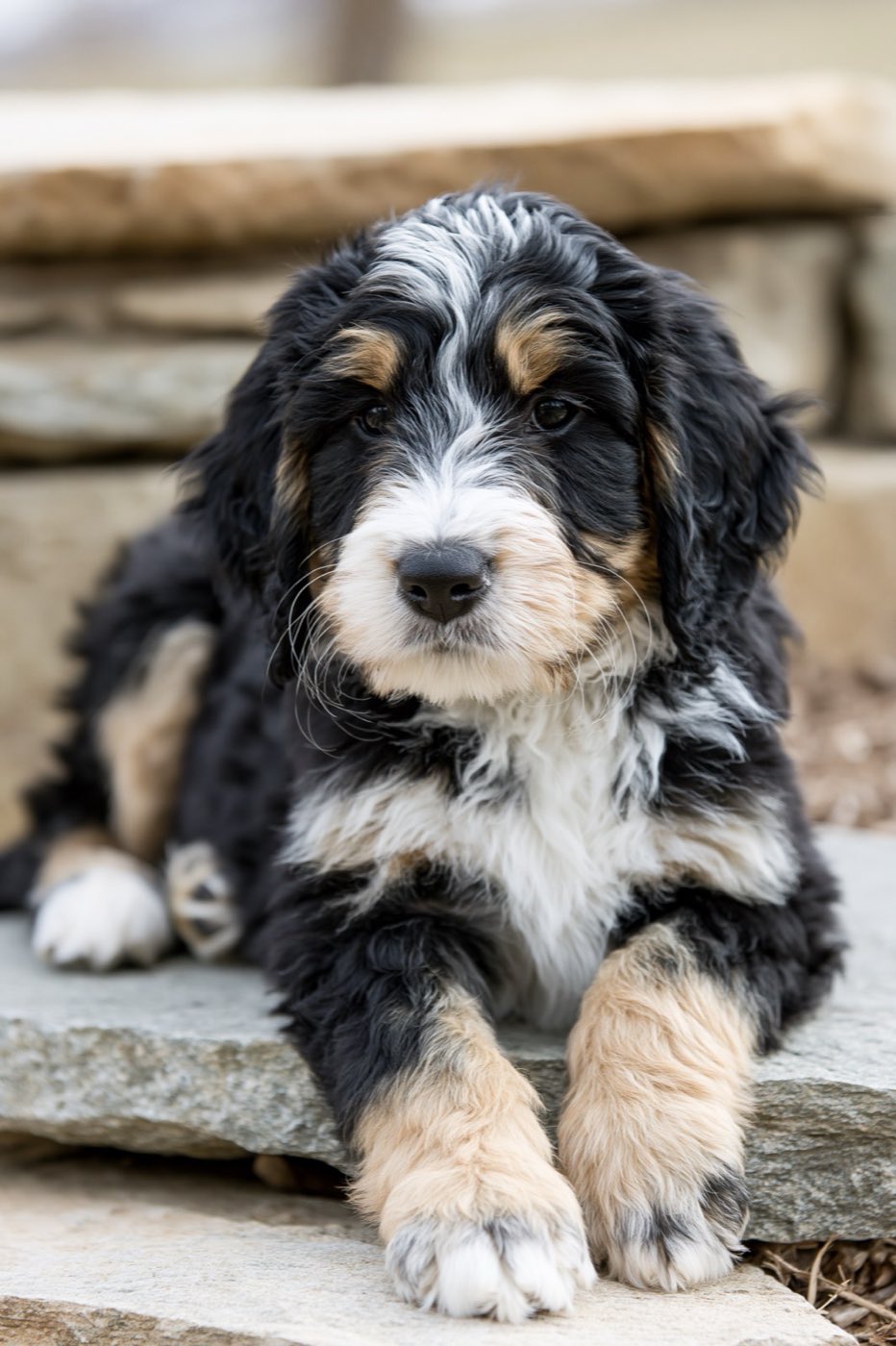
F1 × Poodle. Wavy to curly, very low shedding, best for allergies.
F1b × Poodle. Curly, lowest shedding, Poodle-like build.
Doodle × Doodle (F2) or F2 × Poodle (F2b). Less predictable unless parents are coat-tested.
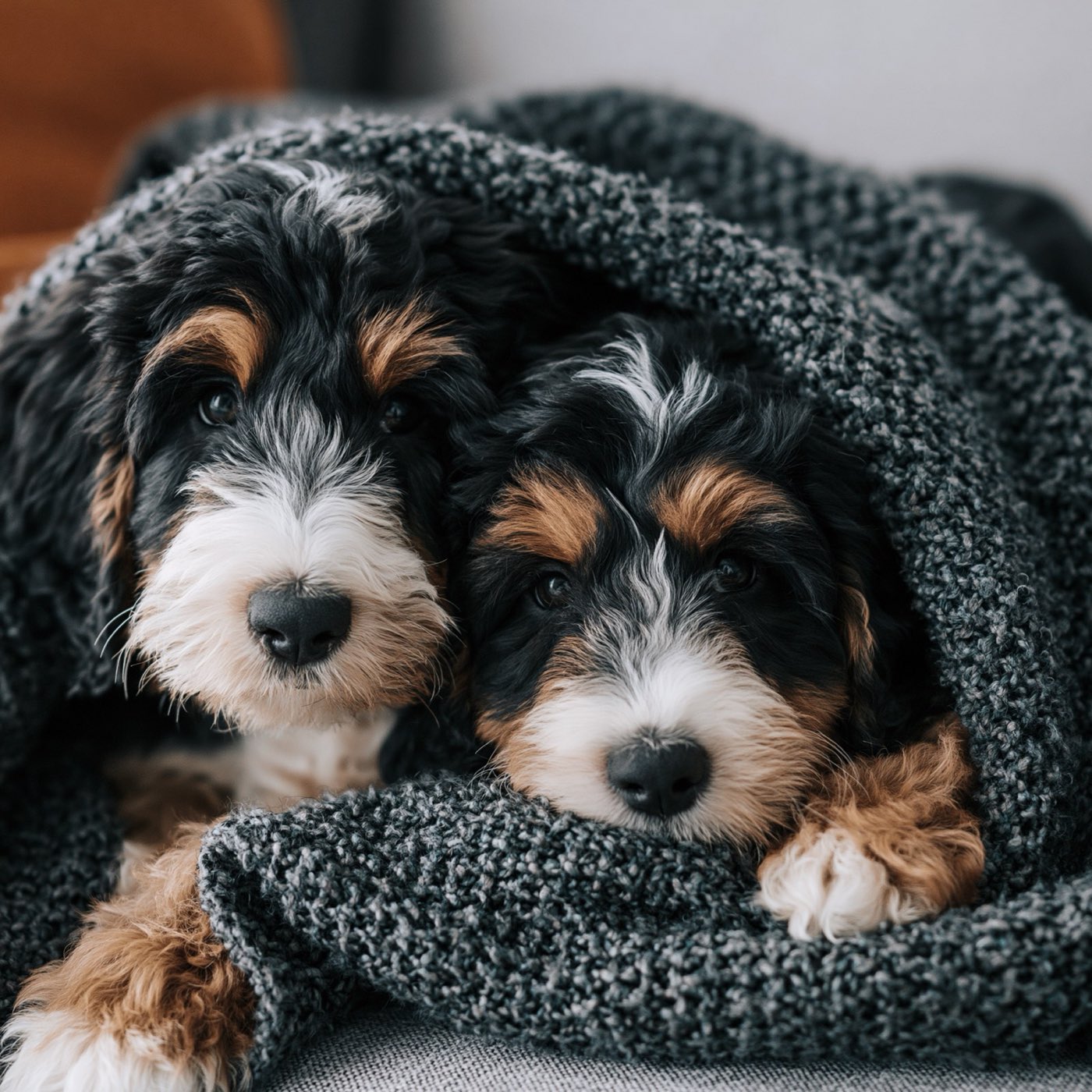
F1b or later × F1b or later. Consistent coats when parents are DNA tested.
F1b means first generation backcross: an F1 Bernedoodle (Bernese × Poodle) bred back to a Poodle. The puppies are about 75 percent Poodle and 25 percent Bernese, which gives curlier, lower-shedding coats than an F1.
F1b. The extra Poodle makes a furnished, wavy-to-curly coat far more likely, and that coat sheds the least hair and dander. For serious allergies, ask for an F1b or multigen puppy whose parents have been DNA tested for furnishings and curl.
Some. Most F1 Bernedoodles have a wavy coat that sheds lightly; a straight-coated F1 sheds more like a Bernese Mountain Dog. F1 is a good fit for families without allergies who want the most Bernese look.
They can be just as healthy as an F1 when the breeder health-tests every parent and avoids close relatives. Hybrid vigor fades in later generations, so parent testing and pedigree diversity matter more, not less.
We currently plan F1 and F1b litters in Standard and Mini sizes, from OFA- and DNA-tested parents. Each litter page lists its generation and expected size and coat.
Tell us about your home, allergies and activity level and we will tell you which upcoming litter is the right fit.